PingPilot
Un cliente pidió una cosa pequeña. Se convirtió en un producto patentado y, años después, una prueba prerregistrada de la patente encontró una promesa que no se sostuvo.


Mi papel
Cofundador y director de producto
- Empresa
- PingPilot
- Nació dentro de
- Scorch, una agencia
- Años
- 2016 a 2018
- Patente
- Uno de los tres inventores que figuran en US 10,868,915
- Fui responsable del producto como cofundador y director de producto, y decidía qué se construía después.
- Diseñé las apps móvil y web adaptable, escribí los documentos de diseño, construí parte del código de la interfaz y me encargué del posicionamiento y el marketing.
- Definí con Brandon Brumage cómo se dirigen las llamadas a la persona adecuada: el enrutamiento que describe la patente.
- Patente US 10,868,915, concedida el 15 de diciembre de 2020 y aún vigente
- 6 meses hasta una versión de prueba, con la patente presentada en el mes 8
- 6 vías para llegar a cada mensaje desde un solo enlace: teléfono, mensaje de texto, chat, video, correo electrónico y calendario
- 71 de 81 situaciones en las que falló la promesa de reparto equitativo de la patente, en mi propia simulación prerregistrada
Resumen
El encargo era una sola frase: que un cliente pudiera iniciar una conversación desde un PDF. En su lugar respondí a una pregunta más grande. PingPilot permite que un cliente contacte a una empresa desde cualquier cosa que pueda contener un enlace web, y que llegue a la misma persona cada vez que vuelve. Ese diseño está recogido en la patente estadounidense 10,868,915.
Puse en marcha el producto dentro de Scorch, la agencia donde era director creativo interactivo, y ayudé a convertirlo en una empresa propia. Años después comprobé las promesas de la patente con una simulación prerregistrada. La parte que vende el producto se sostuvo. La promesa de repartir los clientes de forma equitativa entre el personal, no.
Quiénes participaron
- Brandon Brumage Ingeniero full stack y coinventor. Construyó el back end, el pipeline que prueba y publica cada cambio y el alojamiento en Amazon Web Services.
- Seth Hein Desarrollador de iOS. Convirtió los diseños de Robert en Sketch en la app para iPhone, trabajando sobre la API de Brandon.
- Thomas Horner Ingeniero de software. Configuró las pruebas automatizadas que revisan el código.
- Marca y voz Bryan Roach diseñó el logotipo, Sarah Hamilton ilustró la marca espacial, Colette Kolar la llevó a diseños web y Jacqui Germain escribió la voz del personaje.
- Calidad Nathan Doyle, Mindy Bollegar y Lindsay Newhouse probaron cada lanzamiento y asesoraron sobre la identidad de marca.
- Grad Conn Director de marketing de Microsoft en aquel momento. Dio al equipo acceso sin restricciones a los casos de uso de su equipo.
- Michael Lauricella Evangelista de integraciones de Atlassian. Conoció al equipo en el Web Summit de Lisboa y lo llevó dos veces a AtlasCamp para mostrar las videollamadas construidas sobre las nuevas API de Atlassian.
- Chris Buehler Nos pidió que estudiáramos cómo poner un enlace en un PDF, y pagó la solicitud de la patente.
- Vendedores de empresas socias Vendían empresa por empresa, a cuentas concretas; entre ellos, los ingenieros de ventas de Office 365 de Microsoft. El producto tomó prestadas sus palabras.

Contexto
La petición que me hicieron era pequeña. Chris Buehler quería poder iniciar una conversación desde un PDF. Ese era todo el encargo.
La patente nombra dos problemas más grandes. Normalmente un cliente tiene que entregar sus datos de contacto antes de que una empresa hable con él, lo que es una barrera justo en el momento en que está listo para comprar. Y cada vez que ese cliente vuelve le atiende un miembro distinto del personal, así que no se acumula ningún historial y vuelve a explicarse desde el principio.
Enfoque
Un PDF no es más que un documento que puede contener un enlace. Así que, en lugar de preguntarme cómo iniciar una conversación desde un PDF, me pregunté cómo iniciarla desde cualquier cosa que pueda contener un enlace web. Eso es lo que se presentó: la patente nunca menciona los PDF y trata el teléfono, los mensajes de texto, el chat y el enlace web como vías de entrada equivalentes.
No lo diseñé desde fuera. Pudimos trabajar con vendedores experimentados de empresas socias que vendían empresa por empresa, a cuentas concretas, y el producto tomó prestadas sus palabras: cuentas (las empresas objetivo), personas (tipos de comprador), verticales (sectores), uno a uno.
Diseño
Un hilo, es decir, una conversación en curso, pertenece a una empresa y no a una persona. El número al que llama un comprador pertenece al hilo, y quien lo atienda ve todo lo que esa empresa ya ha dicho. Cada hilo genera su propia página web, su número de teléfono y unas líneas de código para pegar en una página, así que se le puede contactar desde el momento en que existe. Desde ese único enlace, un comprador puede llegar al equipo de seis maneras: teléfono, mensaje de texto, chat, video, correo electrónico o una cita reservada en el calendario del equipo.
Las pantallas de abajo son de mi diseño de la app móvil, rehecho en 2020 con un nombre nuevo, HMU. Esa versión no usa el enrutamiento patentado.
Cómo se enrutó
Una compra, cuatro compradores, seis vías de entrada
Northwind Industrial está comprando un software de planificación para sus 300 técnicos de reparación a Brightline, un proveedor inventado. Siga a las cuatro personas que tienen que ponerse de acuerdo, mientras cada una contacta al equipo de ventas de Brightline desde su teléfono a través de un enlace en algo que estaba leyendo.
El comprador
Northwind Industrial
- Dana
- Priya
- Marcus
- Ellen
Antes de firmar
- Precio para 300 técnicos pendiente
- Revisión de seguridad pendiente
- Una demostración para los despachadores pendiente
- Costo a tres años pendiente
- Condiciones del contrato pendiente
Pricing guide.epub, página 7
Hable con nuestro equipo →
Nadie en Northwind Industrial ha hablado todavía con Brightline
El vendedor
Ventas de Brightline
- Ada Ejecutiva de cuentas
- Boone Ingeniero de soluciones
- Esse Éxito del cliente
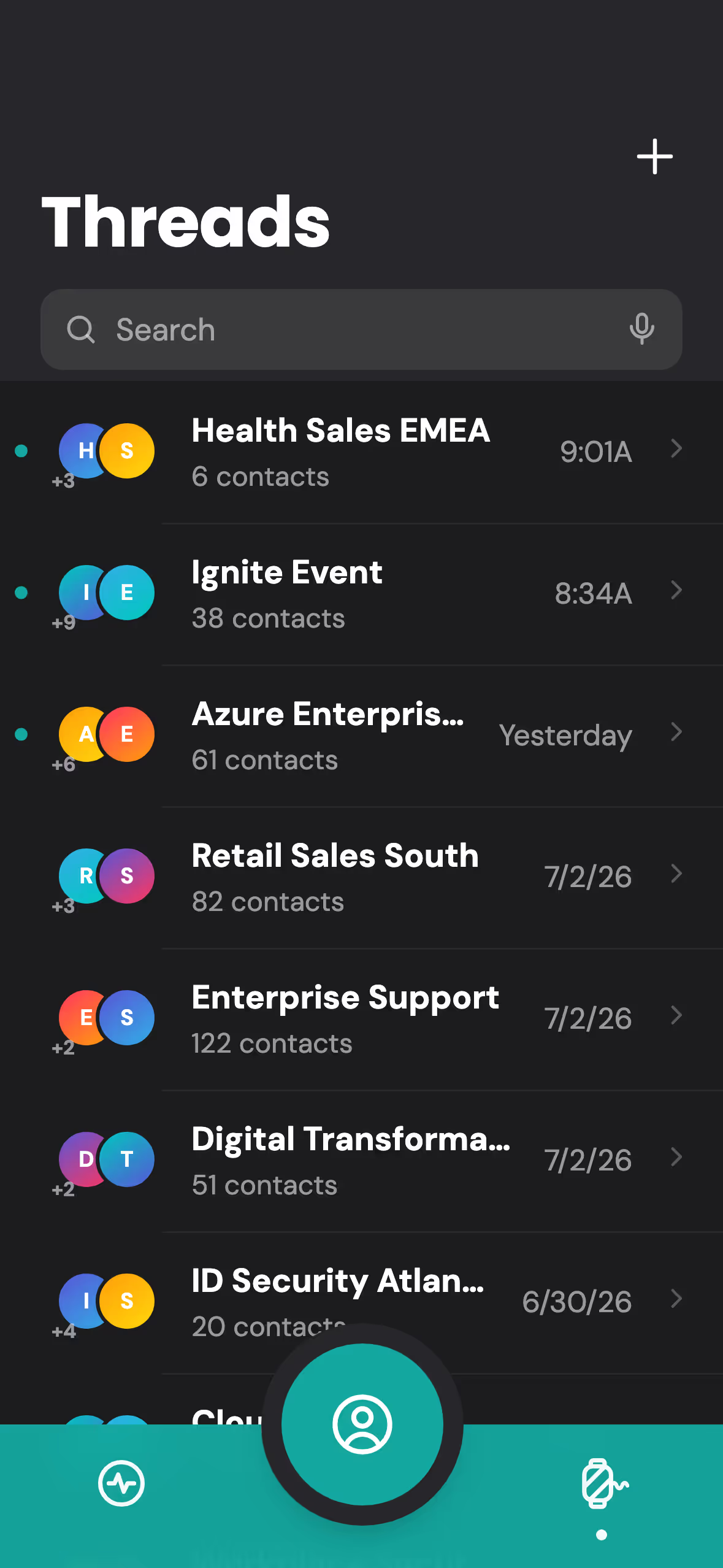
Dana dirige el servicio de campo en Northwind Industrial y necesita saber cuánto cuesta Brightline para 300 técnicos. Está leyendo la guía de precios de Brightline en su teléfono. En la página 7 hay un enlace.
Reconstruido: el producto estaba detrás de un inicio de sesión y nunca se archivó. Quién atiende a quién sale del mismo código de clasificación que ejecuta la medición de abajo.

Más pantallas


Medición

El sistema elige a un miembro del personal por su valoración, con dos bonificaciones fijas agregadas. Una línea de la patente dice que esas bonificaciones “proporcionan equilibrio de carga entre los agentes”, es decir, que repartirían a los clientes de forma equitativa entre el personal. Escribimos esa promesa antes de tener ninguna prueba de ella.
Años después construí una simulación por computadora para comprobarla. Probé 81 situaciones, cambiando lo juntas que estaban las valoraciones del personal, el tamaño del equipo y cuántos clientes llegaban, y ejecuté cada una 200 veces. Anoté el umbral de éxito antes de ejecutar ninguna, para no poder mover la portería.
La simulación prueba lo que dice la patente, no llamadas reales. Los registros de las llamadas reales de aquella época no se conservaron.
Resultados de la simulación
¿Un +0.50 fijo reparte la carga?
La patente dice que los ajustes de valoración “equilibran la carga entre los agentes”, es decir, que reparten el trabajo de forma equitativa entre el personal. Es una promesa sobre el mundo real, y un examinador de patentes nunca tiene que comprobarla. Así que escribí la prueba antes de escribir una sola línea de código: el objetivo, las situaciones que probar y el punto a partir del cual daría la promesa por incumplida.
- La predicción
- Las bonificaciones de valoración de la patente acercan de forma real a los clientes a un reparto equitativo entre el personal, en todo el rango de valoraciones que podría tener un equipo real.
- Si falla
- Las bonificaciones no cambian nada de verdad. Los clientes se acumulan en las personas mejor valoradas más o menos igual que si se clasificara a todos solo por su valoración.
- Umbral de éxito
- Las bonificaciones tenían que cerrar al menos el 50% de la distancia hasta un reparto equitativo en cada una de las 81 situaciones probadas. Por debajo del 20% cuenta como un fracaso rotundo en esa situación.
- Resultado
- NO SE SOSTUVO Se cumplió en 10 de 81 situaciones; la predicción las necesitaba todas. Fracasó rotundamente en 31 de ellas.
estrecha 4.1–4.8 10 de 27 alcanzaron el umbral
Cerró en promedio el 46% de la brecha, y solo el 18% en el peor caso. La persona peor valorada del equipo no recibió ni un cliente en el 49% de las ejecuciones.
moderada 3.5–5.0 0 de 27 alcanzaron el umbral
Cerró en promedio el 28% de la brecha, y solo el 14% en el peor caso. La persona peor valorada del equipo no recibió ni un cliente en el 87% de las ejecuciones.
amplia 2.0–5.0 0 de 27 alcanzaron el umbral
Cerró en promedio el 14% de la brecha, y solo el 6% en el peor caso. La persona peor valorada del equipo no recibió ni un cliente en el 99% de las ejecuciones.
El límite de este resultado
Los equipos de ventas reales tienen valoraciones mucho más apretadas que cualquier cosa probada aquí. En la práctica están entre 4.85 y 5.00, porque a quien se queda por debajo se le acaba sacando del equipo en lugar de dejarlo en él. Esa franja es más estrecha que la situación más estrecha de arriba, así que esta prueba no dice qué hicieron las bonificaciones donde de verdad se usaron. No agregué una situación para ello. Agregar una más favorable después de ver el resultado es justo lo que escribir la prueba por adelantado pretende impedir, y un resultado honesto vale más que una cifra mejor.
Por qué falla
Los dos ajustes son de todo o nada, así que solo distinguen a dos personas cuando una cumple la condición y la otra no. Cuando las valoraciones están más separadas que el 1.00 que pueden sumar ambas bonificaciones, a la persona mejor valorada no se la puede superar en absoluto. En un equipo de cinco con valoraciones muy dispersas, una persona se llevó 889 de 1,000 clientes y tres no recibieron ninguno. Cuando hay pocas consultas, nadie llega a 25 clientes, así que todos reciben la bonificación y se anula. Cuando hay muchas, todos superan con creces los 25, así que nadie la recibe y vuelve a anularse. Las bonificaciones solo reparten el trabajo de forma equitativa mientras el equipo ronda los 25 clientes y las valoraciones están lo bastante cerca como para que 1.00 cambie el orden.
Resultados
La promesa de reparto equitativo falló en 71 de las 81 situaciones. Solo se cumplió cuando las valoraciones del personal estaban muy juntas, e incluso entonces solo en 10 de esas 27 situaciones. Allí donde estaban más dispersas, las bonificaciones no podían igualar el trabajo. La parte que el producto vende de verdad, devolver a un cliente que regresa a la misma persona, sí se sostuvo.
La patente se concedió el 15 de diciembre de 2020 y sigue vigente. Ahora pertenece a Cbda Holdings LLC. Diez años después, la promesa de reparto equitativo es la parte de la solicitud que escribiría de otra manera.
6
formas de contactar al equipo desde un solo enlace: video, chat, mensaje de texto, llamada, correo electrónico y agendar una cita.
42
enlaces de campaña que siguen guardados en el Internet Archive, en 12 Signals y con las seis vías de entrada.
HMU
La app móvil y la app web adaptable, con nueva marca en 2020.
Lo próximo
HMU, rehecho para la IA
La misma persona cada vez, con un agente de IA que cubre las ausencias. Aún no está construido: únase a la lista de espera y dígame si es para usted.
Créditos
Robert Duebelbeis
Director de producto (CPO) · Inventor reconocido en la patente
Fue responsable del producto: diseñó cómo se veía y funcionaba, construyó el front end y lo comercializó empresa por empresa.
-
Ingeniero full stack · Inventor reconocido en la patente
Construyó el producto de principio a fin: la API, el pipeline que prueba y publica cada cambio y el alojamiento en Amazon Web Services.
-
Desarrollador de iOS
Convirtió los diseños de Robert en Sketch en la app para iPhone y la conectó a la API que construyó Brandon.
-
Ingeniero de software
Configuró las pruebas automatizadas que revisan el código, después de que Brandon lo formara en ellas.
-
Bryan Roach
Director creativo general, Scorch
Diseñó el logotipo y prestó a su equipo creativo al equipo de producto.
-
Directora de arte, Scorch
Dio vida a las ilustraciones espaciales de la nueva marca y al carácter audaz y pionero en el que se estaba convirtiendo.
-
Redactora de contenidos, Scorch
Dio voz al personaje en los textos, abrazando los emoji y el odio de Robert por el correo electrónico.
-
Directora de arte interactivo, Scorch
Convirtió las ilustraciones espaciales en diseños web coherentes, junto con un calendario de producción completo.
-
Redactor sénior de contenidos, Scorch
Control de calidad (probar el producto antes de cada lanzamiento) y asesoría en identidad de marca.
-
Directora interactiva, Scorch
Control de calidad (probar el producto antes de cada lanzamiento) y asesoría en identidad de marca.
-
Directora creativa, Scorch
Control de calidad (probar el producto antes de cada lanzamiento) y asesoría en identidad de marca.
-
Director de marketing, Microsoft
Nos dio acceso sin restricciones a los casos de uso de su equipo.
-
Evangelista de integraciones, Atlassian
Nos conoció en el Web Summit de Lisboa y después nos llevó dos veces a AtlasCamp, donde mostramos las videollamadas de PingPilot construidas sobre las nuevas API de Atlassian.
-
Chris Buehler
Inventor reconocido en la patente
Nos pidió que estudiáramos cómo poner un enlace en un PDF. Pagó la solicitud de la patente.

Quién inventó qué
Los nombres que figuran en una patente importan legalmente, así que quiero ser exacto. Brandon Brumage y yo hicimos la invención que describe la patente, y nadie más. Chris Buehler nos pidió que estudiáramos cómo poner un enlace en un PDF y pagó la solicitud de la patente. Según el derecho de patentes, ninguna de esas dos cosas convierte a alguien en inventor: la prueba es si ayudó a inventar lo que reivindica la patente. La ley (la Sección 256 de la ley de patentes de EE. UU.) tiene una vía para corregir un nombre que no cumple esa prueba. No he pedido esa corrección. Solo lo cuento tal como ocurrió, tal como lo viví.