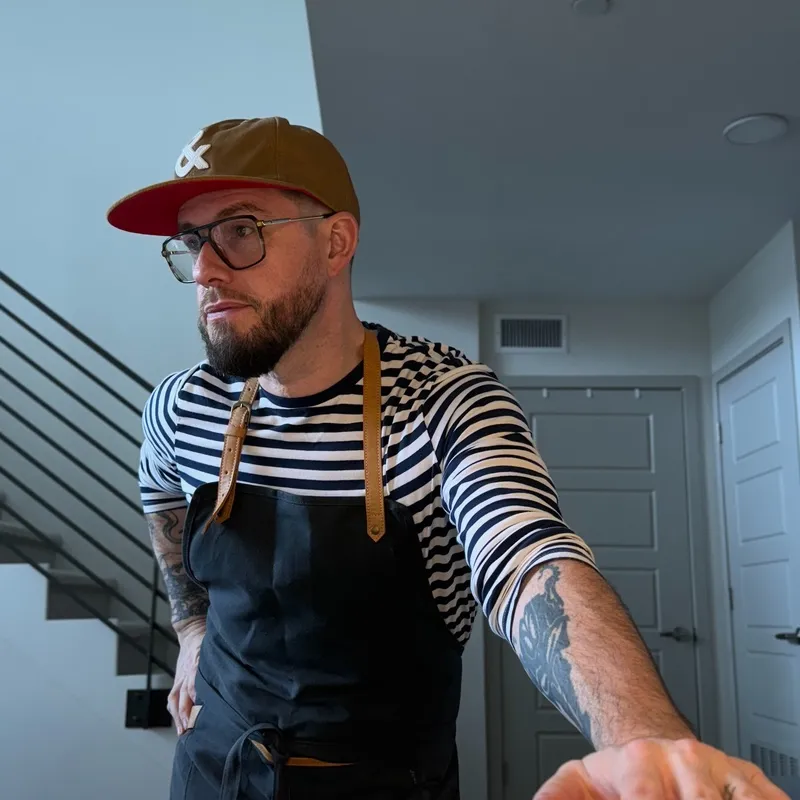
Creative Director at Timmermann Group, leading discovery, design and the theme and plugin code on a research-led rebuild. Signature Medical Group is a physician-owned, multi-specialty independent medical group. More than 110 doctors work across some 30 locations in St. Louis and Kansas City. I led a cross-disciplinary team of seven: an account strategist, two content strategists, two art directors and two WordPress developers. We began in October 2014 with an analytics baseline and a competitive benchmark. I prototyped in Sketch from day one. Work moved through staging after the discovery report. Nothing reached production until February 2016.
The Challenge
The existing site was a DevExpress-era ASP.NET WebForms build with no intuitive pathways to content. But the real problem was only visible once the data was in. A blind single-answer survey on the live site found the most common reason for a visit was to find a physician, at 25.3%. Access to health records was close behind, at 24.1%. The analytics baseline, run against October 2014 traffic, found provider profiles had the highest bounce rate on the site, pointing at the doctor locator itself. The most-wanted task was the worst-performing one. Worse, most arrivals came through organic search and averaged three pages before leaving. Users relied on third-party sites to find content that should have been reachable directly.
Before
signaturemedicalgroup.com before rebuild, January 2016
Research ran first, and the deliverable documented the full method. I recruited participants by Lead User Sampling, the technique von Hippel described in Management Science in 1986. Six active healthcare patients each sat for a one-hour interview. Three knew SMG and three did not. More than eighty people answered a survey. Five SMG business leaders sat for contextual interviews with a participatory design session. Six cognitive walkthroughs covered four direct competitors, Esse Health, BJC, Mercy and SSM, plus two indirect ones in Anthem and ZocDoc. I synthesised the interviews into a five-phase patient journey: Research, Scheduling, Pre-Visit, Visit and Post-Visit. Each phase is marked linear or non-linear, because a shopping phase that loops needs different handling from a visit that runs once. I scored stakeholder requirements MoSCoW, with a confidence percentage on each. The scores exposed a disagreement they did not settle. Online appointment scheduling sat in SHOULD at 75% confidence and in WON'T at 25%.
Research
Discovery ran from October 2014 and put nothing into production for sixteen months. Sketch prototyping started on day one and iterations ran in staging once the discovery report was complete. Only the release waited. Three instruments did the work. A survey went to visitors on the live site. Six one-hour patient interviews fed a journey model. Five contextual interviews with SMG leadership were scored for agreement.
Please select the reason for your visit
I need to find a physician25.3%+10.3 / −8.1
I need access to my health records24.1%+10.2 / −7.9
I need to find a specialty practice12%+8.7 / −5.4
I need to know who sent an invoice12%+8.7 / −5.4
I need info on SMG10.8%+8.5 / −5
I need to verify my insurance coverage9.6%+8.2 / −4.7
I need to research general health info3.6%+6.5 / −2.4
Careers // Job2.4%+6 / −1.7
Research
Observation only
“Finding doctors recommended to me who accept patients & my insurance”
Internet search
Physician referral
Friend or relative
Insurance directory
Third-party doctor listings
Print, radio, television, billboard
Community event
Find a Doctor
Scheduling
Active
“Scheduling an appointment with a healthcare professional”
Request Appointment form
Click to call
Practice front desk
Pre-Visit
Observation only
“Waiting for and completing intake paperwork”
Get Intake Form
Patient Portal
Practice by phone
Visit
Active
“Consulting with the doctor about my health treatment needs”
In person, with the clinician
Post-Visit
Observation only
“Scheduling follow-ups. Paying bills. Updating my loved-ones”
Pay My Bill
Health Records
Patient Portal
Follow-up by phone
Family and carers
MUST
Improve awareness & ranking providers in search engine results100%
Improve integration of group brand strategy100%
Improve awareness & evaluation of patient-related value propositions75%
Improve cross-marketing opportunities75%
SHOULD
Improve online appointment scheduling75%
Improve site resources/content engagement75%
Improve awareness & evaluation of provider recruitment value propositions75%
Improve patient understanding of costs/payments for services & bill readability67%
COULD
Improve provider recruitment and retention rates100%
Improve awareness of community projects75%
WON'T
Improve health information portals100%
Improve online appointment scheduling25%
Participants came from Lead User Sampling, the technique von Hippel described in Management Science in 1986. Six patients sat for interviews, three already familiar with the group and three not. More than eighty people answered a blind single-answer survey. Five stakeholders gave contextual interviews with a participatory exercise inside them. Six cognitive walkthroughs covered four direct competitors and two indirect.
observedCollected on the live site and in scheduled sessions between October 2014 and March 2016, and reported with confidence intervals. Figures are quoted from the discovery deliverable of 8 January 2015.
Stated in the deliverable at the time: the sample is not representative of the general population, and this is not a statistically valid quantitative study. It is a contextual exploration meant to surface issues that lead users are especially articulate about.
01 Information Architecture
The planned architecture, drawn before the build. Annotation 1 states the doctor locator is a homepage feature: the earliest retained statement of the input the whole study rests on, made in March 2015, ahead of any code.
observedThe sitemap deliverable as issued, dated March 2015 in its own title block and retained in the project record.
Find a Doctor, said twice
Find a Doctor leads the navigation and repeats as the first thing in the page body
Design input
Finding a physician must lead the site rather than sit inside a department structure
Actions
D-001 Find a Doctor as the first item of the primary navigationD-002 Homepage search panel with Find a Doctor and Find a Practice tabs
Verification
Wayback capture inspected at 1280px desktop and 390px mobile
Outcome
H-001Retained 2021Find a Doctor is still the first item of nav_primary in the 2021 capture. Still surfacing in 2026: Find a Doctor is one of five Google sitelinks for the brand query
The whole clinic on one page
One page holds the entire practice: contact, services, hours, every physician and every location the clinic operates from
Design input
Every practice must state its membership of the group on its own page
Actions
D-005 Practice masthead carrying the line A Division of Signature Medical GroupD-006 Practice entity typed as MedicalClinic with memberOf and brand
Verification
Archived markup inspected for the endorsement line and for memberOf
Outcome
H-004Lost 2021The endorsement line is gone from the page. It survives only in the title tag
A doctor under their own roof
A physician sits under the masthead of their employing practice rather than the group's. Everything the entity markup declares is a field on this page: specialty, procedures, hospital affiliation, address
Design input
Physicians and practices must be resolvable as entities by a search engine rather than as prose
Actions
D-006 Practice entity typed as MedicalClinic with memberOf and brandD-007 Physician entity typed with specialty procedure affiliation and address
Verification
Archived markup inspected for schema.org types on both templates
Outcome
H-005Lost 2021Every schema.org type removed in the replatform. BreadcrumbList is the only markup left, and it is a CMS default. The 2026 listing is a plain title, URL and snippet with no rich result, which is what the removal predicts. Noted and excluded: the knowledge panel on that query resolves to an unrelated home health business in Tempe, Arizona. The search was run from Arizona and knowledge panels are location-biased and driven by Google Business Profile rather than on-page markup, so that is not evidence of entity collapse
02 Content Strategy
What the phone drops
At 390px the background video and the desktop navigation are both display:none
Design input
A patient on a phone must not be made to download the homepage background video
Action
D-011 Background video suppressed below the mobile breakpoint
Verification
Archived page rendered at an iPhone viewport and at desktop and the computed styles compared
Outcome
H-009Not applicableNo background video on the 2021 homepage, so the suppression rule has nothing left to govern
The request knows which doctor it is for
Scoped to the doctor whose page it opens from. It captures a requested date and time and how the patient heard about that named physician
Design input
Appointment demand must be captured at the physician level without committing the group to live scheduling
Actions
D-012 Request Appointment control in the utility barD-014 Physician-scoped appointment request form capturing a requested date and timeD-015 Referral source capture on the appointment request form
Verification
Wayback capture of the utility bar and of the request form on a physician page
Outcome
H-010Retained 2021Request Appointment persists across the primary, secondary and tertiary navigation
Brand Architecture & Canonical Presence
Signature was not one brand. It was a group that endorsed practices, and practices that housed independent physicians who had bought into the group. The engagement was a strategic investment in design, marketing and brand, owed to each of them. So the brand architecture had to be expressed twice: once for readers, and once for machines.
The clinic operates inside three buildings it does not own, all sharing one telephone number. A clinic declares location because it works in several places. A physician declares address because a person has one.
Type
Three faces, three jobs
Signature Medical Group is an independent, multi-specialty physician group serving greater St. Louis, greater Kansas City and Bolivar, Missouri.
AaAaAaAa
Find a Doctor · Why Signature? · Community Outreach · Programs
Montserrat · headlines and every control
01 / 06Type
A patient arriving here is doing two different things: reading and acting. Freight Text Pro sets the reading: 20px on a 32px line, the proportions of a book, because insurance, conditions and credentials are dense and serious. Montserrat sets the acting: every headline at 52px uppercase, and every button, so the things you can do look like things you can do. JAF Bernino Sans holds the navigation and gets out of the way.
Find a DoctorFind a Practice
Browse by specialty or enter doctor's name
Browse by specialty or enter doctor's name. The homepage search panel repeats the primary navigation's first item, so the most-wanted task is reachable twice above the fold.
2 JAF Bernino Sans · 32px · the prompt, quieter than the headline
3 Freight Text Pro · 20px on a 32px line · anything to be read
4 Montserrat · 16px · uppercase · the control, matching the headline's voice
02 / 06Hierarchy
The homepage search panel, where the type system does its most important work: two tabs, a prompt, and the conversion control.
Grid
Root
10px
Body
2rem / 3.2rem
Baseline
32px
Step
4px
4
8
16
32
48
64
96
128
Contrast audit
Pair
Ratio
WCAG
AaOrange link on white, bold Request Appointment and other priority links. Set at weight 700, which is what puts it over the line
3.12:1
AA-large
AaWhite on the masthead scrim The headline over the hero photograph. Measured from the composited pixels, scrim and photo together
5.60:1
AA
AaWhite on hover teal Button and link hover
5.30:1
AA
AaBody grey on white Body copy
12.63:1
AAA
AaNavy on warning amber Consequence states
10.24:1
AAA
AaWhite on danger red Request Appointment in the utility bar
3.96:1
AA-large
AaWhite on primary teal Flat buttons. The one real failure: #21A3B8 would reach AA-large, #1A8293 AA
2.45:1
FAIL
AaMuted grey on white Secondary labels. A Bootstrap 3 default, inherited
2.55:1
FAIL
AaTeal link on white, regular Ordinary navigation links. The orange was the fix for the ones that mattered; these were left
2.45:1
FAIL
AaFooter teal on dark Links on the footer ground
8.36:1
AAA
03 / 06Foundations
Spacing moves in 4px steps. Nothing you can tap is smaller than 48px, and the main controls are 64px, so the site works with a thumb on a small phone. Colour needed a second answer: the brand teal is too light for white text on a flat button and too light as a link, so the links that mattered were set in orange at bold weight, which clears the bar. The ordinary teal links were left as they were.
practice.php · main.js
<aclass="btn btn-primary btn-block
btn-request-appt-doc apptPracEvent"
href="/request-appointment/">
Request Appointment
</a>
$('.apptPracEvent').on('click',function(){
ga('send','event',
'Appointment Request Tracking',
'Click/Touch',
'practice');
});
Request Appointment
category
Appointment Request Tracking
action
Click/Touch
label
practice
04 / 06Interaction and measurement
One class does two jobs: it styles the control and it names the event. The button is 64px, two baselines, and its class is what the handler binds to, so the same decision that sizes the target also decides what the report can say about it.
Rich directory listings
Signature Medical Group
Medical group
Website
Directions
Save
An independent, multi-specialty physician group serving greater St. Louis, greater Kansas City and Bolivar, Missouri.
Find a DoctorSearch by specialty, name, zip or insurance
A Division of Signature Medical Group. EMG and nerve conduction studies, MRI imaging, orthopaedic surgery, pediatric orthopaedic surgery, sports medicine.
Address:
845 North New Ballas Court, Suite 200, St. Louis MO 63141
Hours:
Mon–Fri 8:30AM–5:00PM
Ortho Now:
621 S. New Ballas · Mon–Fri 5:30–8:30PM, Sat 8:30AM–2:00PM
Phone:
(314) 983-4700
Also at:
Progress West Hospital, O'Fallon · Bellevue Medical Plaza, St. Louis
Robert P. Bruce, M.D.
Orthopedic surgeon at Kansas City Bone & Joint Clinic
Website
Directions
Call
A division of Signature Medical Group. His memberOf names the practice that employs him; the group's endorsement reaches him through the clinic.
Specialty:
Orthopedic Surgery
Services:
General ortho surgery, sports medicine
Hospital:
Menorah Medical Center
Practice:
Kansas City Bone & Joint Clinic
Address:
10701 Nall Avenue, Suite 200, Overland Park KS 66211
Organic results
signaturemedicalgroup.com
Signature Medical Group | Physicians Making A Difference
Signature Medical Group has the best doctors St Louis and Kansas City residents could ask for. Use our website to find the top doctors in St Louis and Kansas …
signaturemedicalgroup.com › practice › mid-county-orthopedic
Mid County Orthopaedic Surgery & Sports Medicine | Signature Medical Group
Mid County Orthopaedic Surgery & Sports Medicine is a specialty practice provider of orthopedic surgery and sports medicine services in the St. Louis, MO …
signaturemedicalgroup.com › doctor › robert-p-bruce
Robert P. Bruce | Signature Medical Group
Robert P. Bruce is part of the Signature Medical Group network of top physicians in the Kansas City, MO area practicing orthopedic surgery.
Shared on Facebook
signaturemedicalgroup.com
Signature Medical Group
Physicians Making A Difference
signaturemedicalgroup.com
Mid County Orthopaedic Surgery & Sports Medicine – CityPlace 5
The physicians and staff of Mid County Orthopaedic Surgery & Sports Medicine are committed to giving our patients the highest quality care and service.
signaturemedicalgroup.com
Robert P. Bruce
Dr. Bruce has been a part of the Kansas City Bone & Joint team since 1988. He is board certified in Orthopedic Surgery and has an interest in sports medicine.
05 / 06Presence
The group gets sitelinks because the navigation is four audience-shaped items. A practice shows an address, opening hours and a phone number because it declares them as a place. A physician lists a specialty and a hospital because those are properties on the entity. The Facebook cards follow the same split: the entity pages set their own title, description and image and ship as large-image cards, while the homepage was left on the plugin's defaults.
I wrote the theme in PHP on Roots Sage, and the plugins that gave the group its content model and its editing experience. The team moved the content onto it, on a migration plan we wrote together.
Search existed because finding a physician was the most common reason for a visit, and the hardest thing to build. Saving and sharing existed because the content strategy treated the site as the group’s record of itself.
signature-medical-grouptheme
Roots Sage compiles assets/ to dist/ with a content hash in every filename, so browsers can cache the bundle forever and still pick up a change the moment it ships. It is also why the analytics taxonomy is recoverable: thirty event calls survive in one archived file, main-7541c5ed.js
doctorcustom post type
A page per physician: specialty, procedures, hospital affiliation and the practice that employs them
practicecustom post type
A page per clinic: contact, services, hours, its physicians and every location it operates from, with a paginated archive at /practice/ that the post type provides
The browse layer above the entities. The only tier that never carried typed markup
programscustom post type
Nutrition Edge, Strong Start and the trainer network, each with its own page
signature-searchplugin
Typeahead over every physician and practice name, plus facets for specialty, zip, insurance and language. The hardest thing on the engagement, and the one the survey said mattered most. Still working in the archive
signature-favorite-postsplugin
Lets a patient save a physician, practice or post to return to. Source of the Bookmark Tracking events
signature-sharerplugin
Sharing a highlighted passage as well as a whole page. Source of the two Share Tracking labels
Stack
PHPTheme and plugin language
WordPressCMS and custom post types
Roots SageTheme build: assets/ to dist/, revved filenames
Bootstrap 3Grid and navbar, with Jasny for the off-canvas menu
jQueryEvent binding for the analytics taxonomy
Select2The typeahead and the facet dropdowns in the doctor search
ModernizrFeature detection
Owl CarouselPatient story and spotlight rotators
Font AwesomeIcon set
TypekitWebfont delivery
Google AnalyticsThe 30-call event taxonomy
Contact Form 7Appointment request and contact forms
Read from the 8 October 2016 capture: script filenames, handles and plugin slugs. Select2 is here because it is what made the search facets usable.
06 / 06Delivery
The content model that outlived the 2021 replatform was code: custom post types in PHP. Search was the hard problem and the one the research said mattered most. Saving and sharing came from a content strategy that wanted the site to be the group’s canonical record of itself, and the highlight-to-share interaction was Medium’s, reimplemented here.
Outcome
The build followed and launched in February 2016, by which point I had left Timmermann Group. I did the discovery, the design and the theme and plugin code, and planned the content migration with the team who carried it out and shipped it. Working that way is what taught me that development belongs alongside design and content strategy, not after them. Everything below is scored against what went live. It was a custom WordPress theme replacing the .NET site. It ran on the design system I authored and reused across clients: a 10px root, a 32px baseline, spacing on a 4px grid at 86% adherence, and named colour utilities. The discovery report itself is the more durable artifact. It states its sampling frame, cites its methodology, and gives confidence intervals for every survey figure. Its limitations section says plainly that the sample is not representative. It calls the study a contextual exploration with no claim to statistical validity. That was written into a client deliverable in 2014, eleven years before this portfolio was built to argue the same thing.
Measurement noteWhat limits these figures
The research figures (the 25.3% and 24.1% survey splits, the October 2014 analytics baseline) come from the retained discovery report, which states its own sampling frame and calls itself a contextual exploration with no claim to statistical validity.
The durability claim is read from the Internet Archive and the live site, not from client analytics: no post-launch measurement was instrumented against the new structure, and I had left Timmermann Group before the February 2016 launch. What is shown is that the architecture survived a 2021 redesign and replatform, not what it moved.
Traceability
Each design input is a specification, not a prediction. The design outputs are what shipped. The verification method is how the archive confirms it. Outcome is a different question: what happened afterwards? For most rows, nobody measured. Where a decision survived the 2021 replatform, run by another team, that survival is the only independent evidence in this record.
12 of 12 items
ID
Hypothesis
Design Output
Acceptance Criteria
Verification Method
Outcome
H-001
Finding a physician must lead the site rather than sit inside a department structure Evidenced
Find a Doctor is the first primary-navigation item and a search control is present above the fold on the homepage
Wayback capture inspected at 1280px desktop and 390px mobile
✓ Retained 2021
H-002
Access to health records must be reachable without using search Evidenced
A records control is present in a persistent patient-resources group on every template
Wayback capture inspected across homepage and physician templates
✓ Retained 2021
H-003
Navigation must be shaped by audience rather than by the organisation chart Evidenced
Primary navigation carries no more than five items and none of them names an internal department
Wayback capture of the primary navigation before and after
✓ Retained 2021
H-004
Every practice must state its membership of the group on its own page Evidenced
The group endorsement is present in the practice masthead and in machine-readable markup on the same screen
Archived markup inspected for the endorsement line and for memberOf
✕ Lost 2021
H-005
Physicians and practices must be resolvable as entities by a search engine rather than as prose Evidenced
Each physician and practice page carries typed markup naming the entity and its relationships
Archived markup inspected for schema.org types on both templates
✕ Lost 2021
H-006
The physician recruitment argument must be a section of the site rather than a careers listing Evidenced
Recruitment content is reachable from primary navigation and is not filed under Careers
Wayback capture of the primary navigation and the utility bar
◑ Demoted 2021
H-007
Value propositions must be demonstrated rather than asserted Mixed
Accessible, affordable and independent care are stated in body copy, and each is carried by D-013 (named patients telling their own outcome story), D-007 (physician credentials published as typed data rather than asserted) and D-009 (figures the group could source)
Archived body copy checked for the three stated claims, and the page checked for the surfaces carrying the fourth
✕ Lost 2021
H-008
Community and programme content must be reachable without displacing the primary task Evidenced
Programmes and outreach occupy their own primary-navigation groups and not the homepage above the fold
Wayback capture of the navigation menus
✕ Lost 2021
H-009
A patient on a phone must not be made to download the homepage background video Assumed
The background video is suppressed below the mobile breakpoint
Archived page rendered at an iPhone viewport and at desktop and the computed styles compared
? Not applicable
H-010
Appointment demand must be captured at the physician level without committing the group to live scheduling Evidenced
A request control is present on every template, and on a physician page the request form is scoped to that physician and captures a requested date and time
Wayback capture of the utility bar and of the request form on a physician page
✓ Retained 2021
H-011
The rebuild must raise provider recruitment and retention Evidenced
A measured change in recruitment or retention attributable to the site
Recruitment and retention figures are held by the client rather than observable from the site
? Not measured
H-012
The site must report what patients were looking for, not only where they stopped Evidenced
Every search facet selection and every off-site conversion is recorded as a named event with the chosen value as its label
Theme JavaScript read from the archive: 30 ga('send','event') calls in main-7541c5ed.js, plus an inline handler on practice phone links
✕ Lost 2021
Appendix
signaturemedicalgroup.com
2020 · BreadcrumbList only. The same practice, with the entity graph goneWhat survived the 2021 replatform
Retained 6
content model
Page-per-practice/practice/ renamed to /locations/
Page-per-physician
Specialty browseUntyped in both eras
Conditions & treatmentsNot present in 2016; 748 archived URLs by 2021, so the model scaled
information architecture
Find a Doctor leading the navigationThe most-wanted task still leads, five years on
structured data
BreadcrumbListA stock default from the new CMS, no authored entity model behind it
Lost 5
structured data
MedicalClinic and Physician typing
memberOf → MedicalOrganizationThe federation link is gone from markup
brand
brand expression
“A Division of Signature Medical Group”Survives only in the title tag
delivery
Custom WordPress theme (Roots Sage, PHP)I wrote the theme. Replaced wholesale in the replatform, but the entity model it defined outlived it: the custom post types behind /doctor/ and /practice/ are still distinct templates in 2021
Endurance is a measure most design work never gets held to. Awards are given at launch, and revenue is credited to the campaign next to it, but neither asks whether the thing still works once the people who built it have gone. This split is that question answered on one project. Six decisions outlived the team, the platform and the CMS. Five did not. Find a Doctor still leads the navigation, ten years on, because it was the most-wanted task in 2014 and nobody since has found a reason to move it.
Credit
Robert Duebelbeis
Creative Director
Discovery research, design, and the theme and plugin code. Planned the content migration with the team.